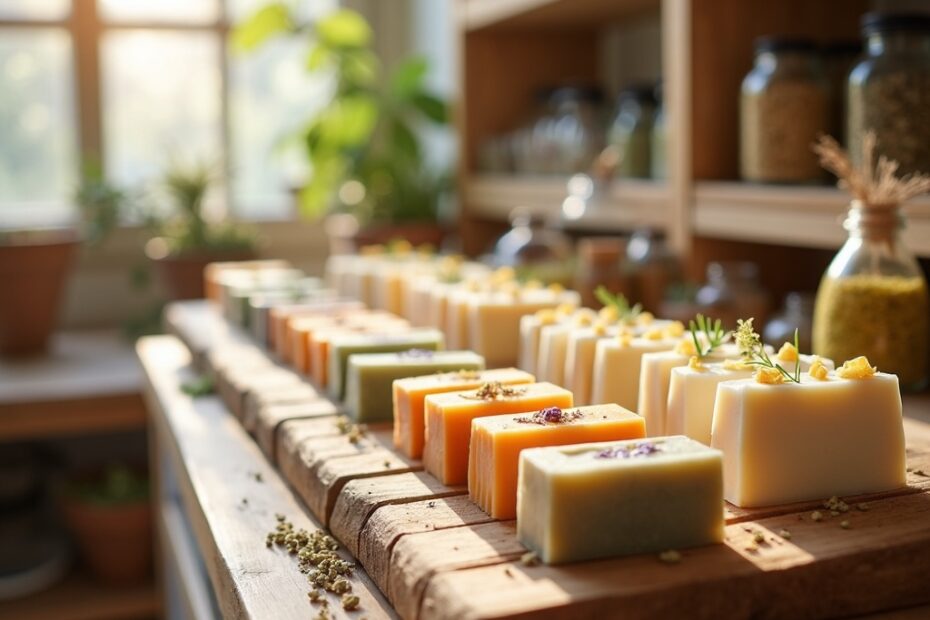
Making the Switch to Handmade Soap: What Your Skin Notices First
Week one with handmade soap isn’t drastically different. But it’s different. Different enough that most people cannot articulate what’s going on for the first week. The lather is different. The post-shower feeling isn’t exactly what people are accustomed to. By day three or four, people start to question if their old soap was even doing anything in the first place.
What Changes Most People Notice Immediately
First, it’s a texture thing. Handmade soap doesn’t create the bigger-than-your-head foam pile like commercial bars, and that’s where people get confused at first. But here’s the reality: that big bubble foam that commercial soap provides comes from detergents and foaming agents. It’s all fluff and isn’t as powerful as it seems for cleaning. Handmade soap creates a creamier, thicker lather that adheres to skin better and ultimately rinses cleaner.
Within the first few days, the post-shower tightness that seemed normal for years just stops happening. That squeaky-clean feeling that commercial soap delivers? It’s actually your skin being stripped of its natural oils. Understanding Naturally Linda’s Handmade Soap Curing process explains why properly made bars maintain skin’s natural moisture balance instead of destroying it. When soap cures correctly, the pH levels stabilize and excess moisture evaporates, creating a gentler product that cleans without that harsh stripped feeling.
Third, people notice how long the bar lasts. A proper cure provides a denser structure that outlives two or three commercial bars because commercial soap is filled with fillers that ultimately melt down into muck in the soap dish and leave people wanting more after just a week or so. Commercial soap is largely water weight with fillers, homemade versions that properly cure for weeks on end are harder, denser, and retain shape.
What Happens During the First Few Weeks?
By week two, dry patches obtained from the seasons change start getting better. This totally throws most people since they’ve gotten accustomed to lathering on lotion after every shower. But soap isn’t actively drying out skin and the body’s natural moisture barrier can do its job again. No, handmade soap isn’t moisturizing; it’s just not destroying what’s already there.
People with sensitive skin or conditions like eczema see this intervene faster than others. Without synthetic fragrances and harsh soaps with chemical preservatives, there is simply less to irritate the skin. Not everyone sees miracles, but baseline inflammation provided by commercial products starts to subside. Redness decreases. Itchy spots reduce. Things that seemed like permanent skin conditions resulted from what was in old soap.
The scent situation also changes. Natural essential oils smell differently than synthetic scents, and they don’t adhere for as long as their fake counterparts. Some people love it because they don’t walk around smelling like an artificial flower field; others miss it. They fail to connect that artificial scent is more often than not what causes skin reactions and headaches. But in this case, many find it worth it once they realize their skin isn’t red and angry anymore.
What’s Different Each Month?
After a month or two, skin starts changing in ways that are harder to quantify but definitely register, such as texture shifts on knees and elbows, those rough patches, start smoothing. Back acne that never fully went away starts clearing up; it’s not an overnight miracle and not necessarily dramatic shifts, but when people travel and need to use commercial soap for convenience, their skin reiterates how angry it can get right away.
The production of natural oils also starts regulating itself. Once upon a time, people thought they were naturally oily; they’re just overproducing oil because aggressive soap stripped everything away. When that cycle is broken, skin can regulate its natural condition. It takes time, weeks, even months, but it’s finally at its true baseline.
The Transition
Not all transitions improve immediately, and that’s important to know on the onset. People who have cycled through years of synthetic brands and strong chemicals experience a detoxed effect where their skin looks worse before it gets better as it acclimates to a new pH balance/reality. But it’s admittedly frustrating when it’s supposed to get better after the first use, but instead only gets worse for the first week or two while everything calms down.
The other adjustment has little to do with transition but more about learning what handmade soap does differently in hard water; it doesn’t get as sudsy; it needs a decent soap dish to avoid mushy soap if used for an extended amount of time (although mushy homemade soap isn’t a bad thing; it’s just not effective for prolonged use without a dish). These aren’t deal-breakers, but they’re different from what most people are accustomed to experiencing for day-to-day use of soap as is.
Why People Don’t Switch Back
Once someone has made the switch and acclimated to all the changes their skin feels and looks better. It’s not about becoming some crunchy granola natural product person or jumping on a trend; it’s about realizing when their skin feels good and looks good and no one upsets it anymore when it gets treated gently instead of getting its oils stripped clean every day, it doesn’t take much effort to change to realize compounding results over time with relative ease.